Passez aux informations du produit
1 de 1

Plantthatplant

Begonia amphioxus

Begonia amphioxus

Prix ​​régulier 89 SEK
Prix ​​régulier Prix ​​de vente 89 SEK
Vente Épuisé
Taxes incluses. Expédition calculé à la caisse.

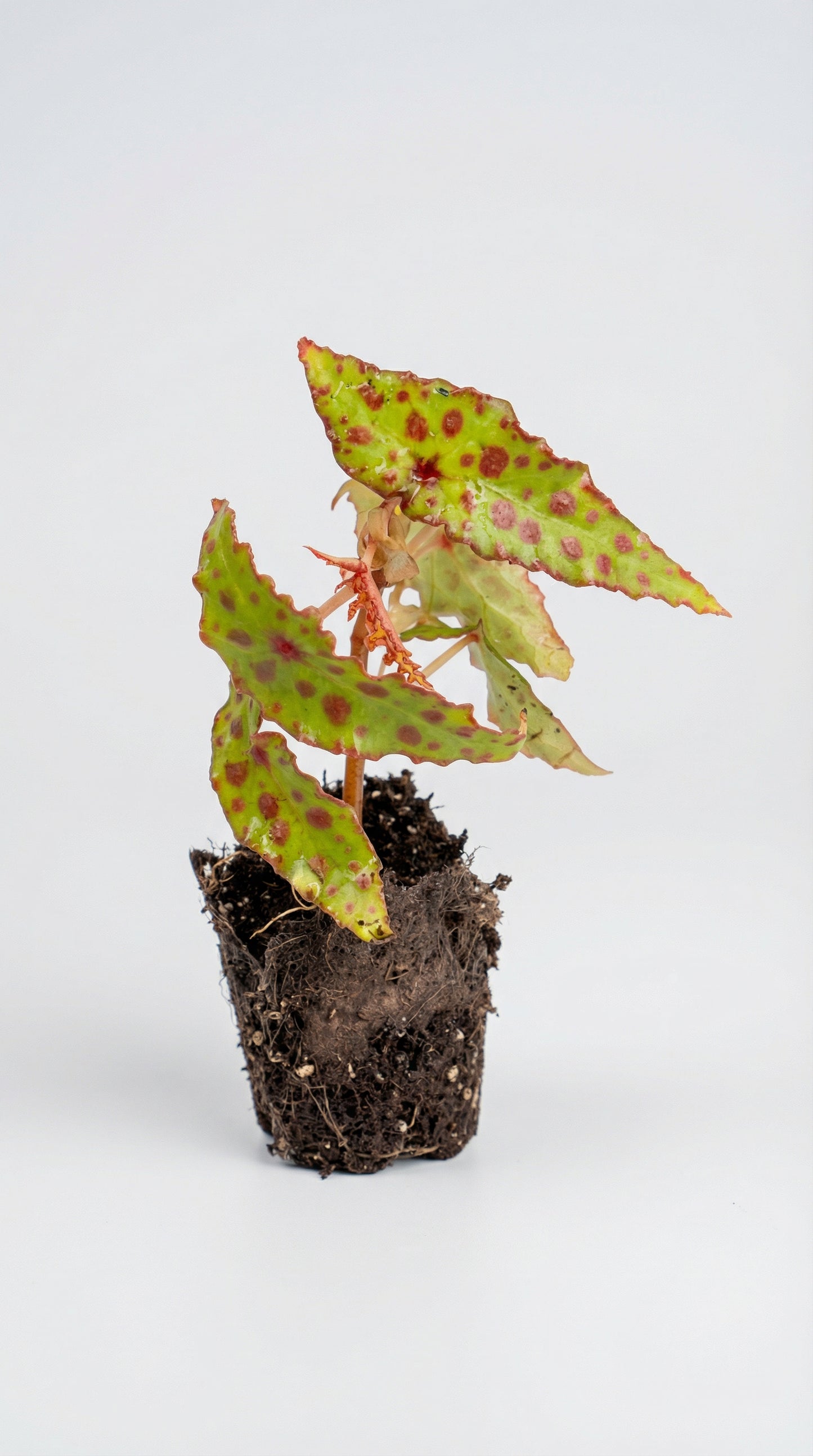
Begonia amphioxus is one of the most visually distinctive species in the Begonia genus. It is characterized by:

  • Narrow, lance-shaped leaves

  • Bright red spots scattered across the leaf surface

  • Red or pink leaf margins

  • A thin, semi-translucent leaf texture

The plant grows in a somewhat upright but delicate, bushy form and typically reaches 20–40 cm in height. It is considered a sensitive but highly decorative collector’s plant.

History and Origin

  • Discovered in the 1980s

  • Described scientifically by botanist Ruth Kiew in 1996

  • Native to limestone forests in Sabah, Borneo

  • Grows naturally in warm, humid, shaded environments, often in limestone crevices

Its natural habitat explains why it prefers good airflow, high humidity, and dislikes waterlogged soil.

Care Tips

Light

  • Prefers bright, indirect light

  • Too little light leads to pale leaves and weak growth

  • Too much direct sun causes leaf burn and loss of color intensity

Watering

  • Maintain lightly moist soil without keeping it soaked

  • Allow the top layer of soil to dry slightly between waterings

  • Soft, filtered or rainwater is recommended

Humidity

  • Ideal humidity is 70–90 percent

  • Thrives in terrariums, display cases or controlled environments

  • Low humidity causes crispy edges and slowed growth

Temperature

  • Ideal temperature range: 20–28°C (68–82°F)

  • Avoid temperatures below 17°C (62°F)

Soil

  • Use a very airy, fast-draining substrate

  • A suitable mix can include: coco or peat, perlite, bark, and a small amount of crushed limestone

  • Avoid dense soils that retain too much moisture

Fertilization

  • Feed lightly every 2–3 weeks during the growing season

  • Use a diluted, balanced fertilizer

Additional Notes

  • Sensitive to overwatering and sudden environmental shifts

  • Performs best with stable humidity and temperature

  • Propagation from stem cuttings is possible but requires high humidity to root well

Afficher tous les détails