Plantthatplant
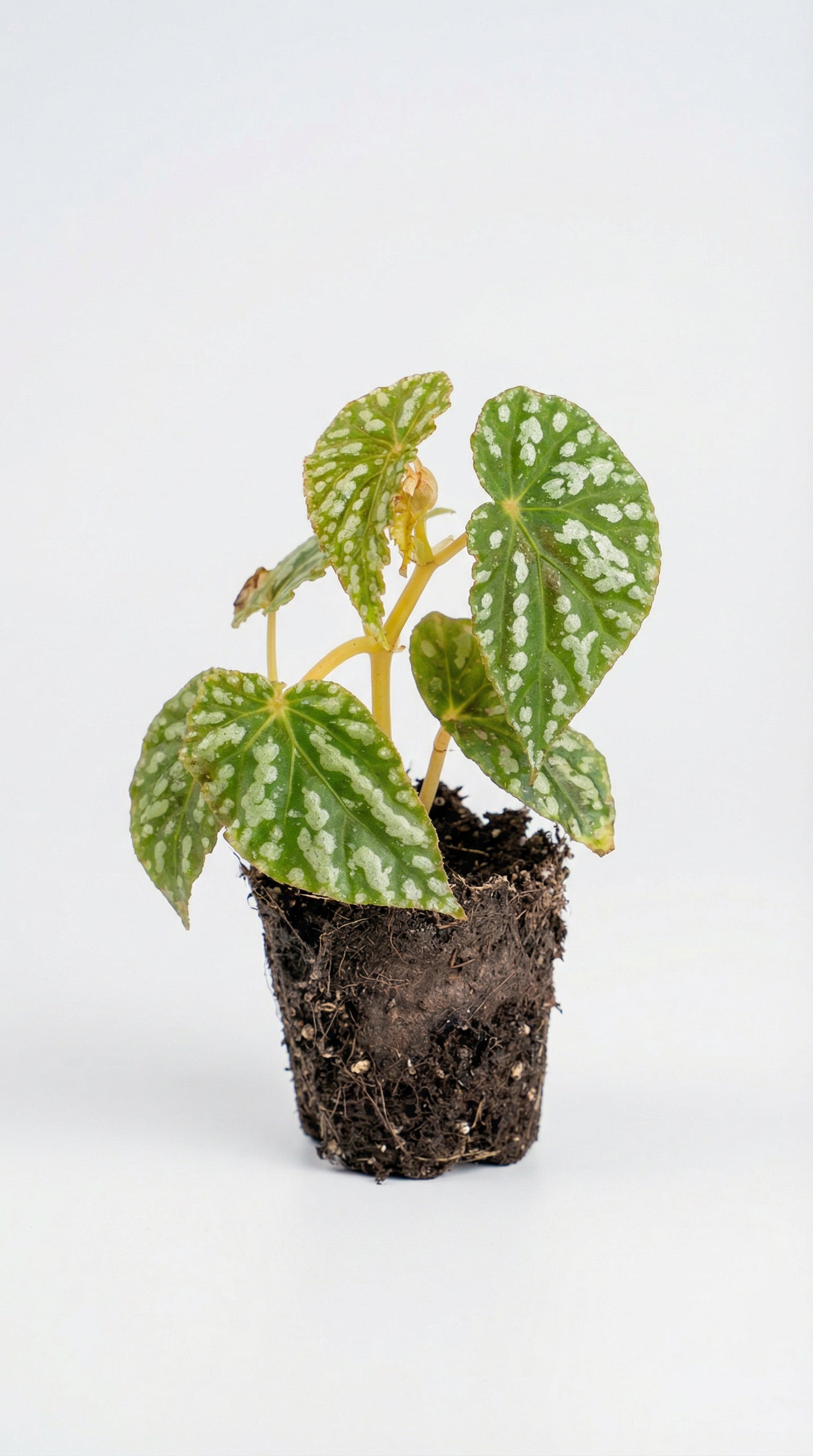
Begonia variabilis sp. ‘Nopphitan’
Konnte die Verfügbarkeit von Abholung nicht laden
Aktie
Begonia variabilis sp. ‘Nopphitan’ is a rare Southeast Asian Begonia known for its elegant, patterned foliage and compact growth habit. It is typically identified by:
-
Small to medium heart-shaped leaves
-
Silvery or pale green surface with dark veins or mottled patterns
-
Slightly textured, often matte or soft-glossy leaf finish
-
Upright but delicate stems, making it suitable for terrariums and cabinet growing
This variant is admired for its subtle beauty rather than dramatic coloration, making it a favorite among collectors of miniature and species-type Begonias.
Background and Origin
-
Originates from Southeast Asia, likely Thailand or adjacent regions
-
Related to the Begonia variabilis complex, a group adapted to moist forest floors
-
Found in shaded, humid habitats with steady warmth
-
Grows naturally among leaf litter, limestone rocks, and mossy substrates
The name “Nopphitan” refers to a locality or collection reference used by Thai growers. It is not an officially described taxonomic variety, but a horticultural identification used in cultivation.
Care Tips
Light
-
Prefers bright, indirect light or medium filtered light
-
Too much sun washes out the patterning
-
Too little light produces elongated stems and dull leaves
Watering
-
Keep the soil evenly moist but never soggy
-
Allow the top layer to dry slightly before rewatering
-
Use soft or filtered water if possible
Humidity
-
Requires moderately high humidity: 70–85 percent
-
Ideal for terrariums, glass cabinets, or grow boxes
-
Low humidity causes leaf curl and dryness at the edges
Temperature
-
Optimal temperature range: 20–26°C (68–79°F)
-
Avoid temperatures below 17°C (62°F)
-
Sensitive to sudden drops in temperature
Soil
-
Airy, well-draining mix
-
Recommended blend: coco/peat, perlite, fine bark, a bit of sphagnum
-
Avoid compact or heavy soils, which quickly lead to rhizome and root rot
Fertilization
-
Light feeding every 2–3 weeks during active growth
-
Use a gentle, diluted balanced fertilizer
-
Avoid strong fertilizers, which can stress the roots
Additional Notes
-
Very stable in terrariums but more sensitive in open-air environments
-
Propagation is possible through leaf cuttings or small stem cuttings
-
Keep airflow gentle but consistent to prevent fungal issues