Ir directamente a la información del producto
1 de 1

Plantthatplant

Begonia darthvaderiana

Begonia darthvaderiana

Precio habitual 229 SEK
Precio habitual Precio de oferta 229 SEK
Oferta Agotado
Impuestos incluidos. Los gastos de envío se calculan en la pantalla de pago.

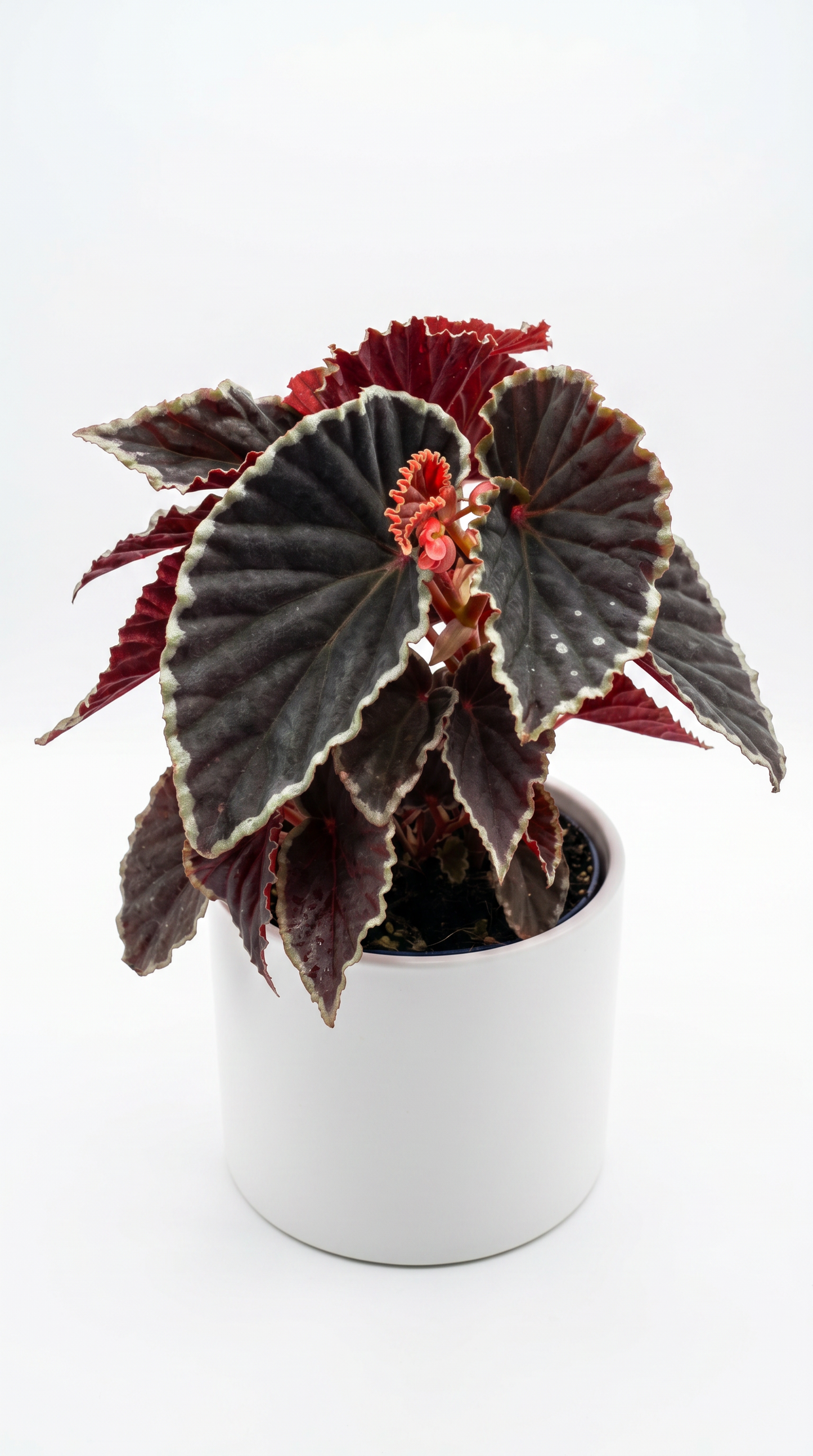
Begonia darthvaderiana is one of the most dramatic and visually striking Begonia species ever discovered. It is known for:

  • Deep, nearly black leaves with a velvety texture

  • Metallic red or bright green veins that stand out sharply against the dark surface

  • Compact growth habit, generally staying under 20 cm tall

  • Small, pale pink flowers that contrast strongly with the foliage

Its appearance makes it highly sought after by collectors, especially those who grow rare tropical species in terrariums or controlled environments.

History and Origin

  • Discovered: Early 2010s

  • Described scientifically: 2014 by Ardi & D.C. Thomas

  • Native range: North Kalimantan, Borneo (Indonesia)

  • Habitat: Shaded, humid, lowland rainforest environments

  • The plant grows on moist forest floors and rock surfaces, benefiting from constant humidity, filtered light, and good airflow.

Shortly after its scientific description, the species became critically threatened due to habitat loss and illegal collection from the wild. Today it is mainly propagated in cultivation through tissue culture and controlled greenhouse production.

Care Tips

Light

  • Prefers low to medium indirect light

  • Too much light causes the leaves to turn more brownish or show burn

  • The best color contrast appears under soft, filtered light

Watering

  • Keep the substrate lightly moist at all times

  • Avoid waterlogging; excess moisture quickly leads to rot

  • Use soft or filtered water when possible

Humidity

  • Requires very high humidity: 80–95 percent

  • Thrives in terrariums, glass cabinets, or enclosed growing spaces

  • Dry air causes leaf edges to crisp and growth to stall

Temperature

  • Ideal temperatures: 22–28°C (72–82°F)

  • Do not expose to temperatures below 18°C (64°F)

  • Avoid drafts and sudden temperature drops

Soil

  • Use an airy, fast-draining mix

  • Example: fine bark, sphagnum moss, perlite, coco fiber

  • Slightly acidic to neutral substrate works best

Fertilization

  • Fertilize lightly every 2–3 weeks during active growth

  • Use a very dilute balanced fertilizer; strong feeding can damage roots

Additional Notes

  • Very sensitive to sudden environmental changes

  • Best grown in stable microclimates

  • Propagation is possible from leaves or stem cuttings, but success rates are higher in high-humidity environments

  • Considered one of the more challenging Begonias to maintain long-term outside a terrarium

Ver todos los detalles